Inter-relationship 

Every year it’s a relief when Spring arrives, the constancy of the seasonal turning of the year reminds us again that all our winters will transform into something lighter and easier.  This year in the UK that is truer than ever with such high rainfall causing despondency and disruption, especially to farmers and land workers.  Currently we are having nightly frost and full sunshine in the days, the earth is waking up to Spring and so are our bodies – our seasonal cycles are harmonised.

The earth is defined by different spheres – the geosphere (earth’s interior and the surface), the biosphere (supporting living beings), the hydrosphere (water), the atmosphere (the zone of gas around the planet) and the cryosphere (the ice caps).  There is a kind of integrated fascia within these zones made up of the water, soil and rock that meets and relates, together with the air.   Under the soil is the amazing mycorrhizal fungi – running through the soil system in a similar to way the fibres of the fascial system in the body, linking  roots to sources of nutrients and water, in return for food from the plants and trees. 

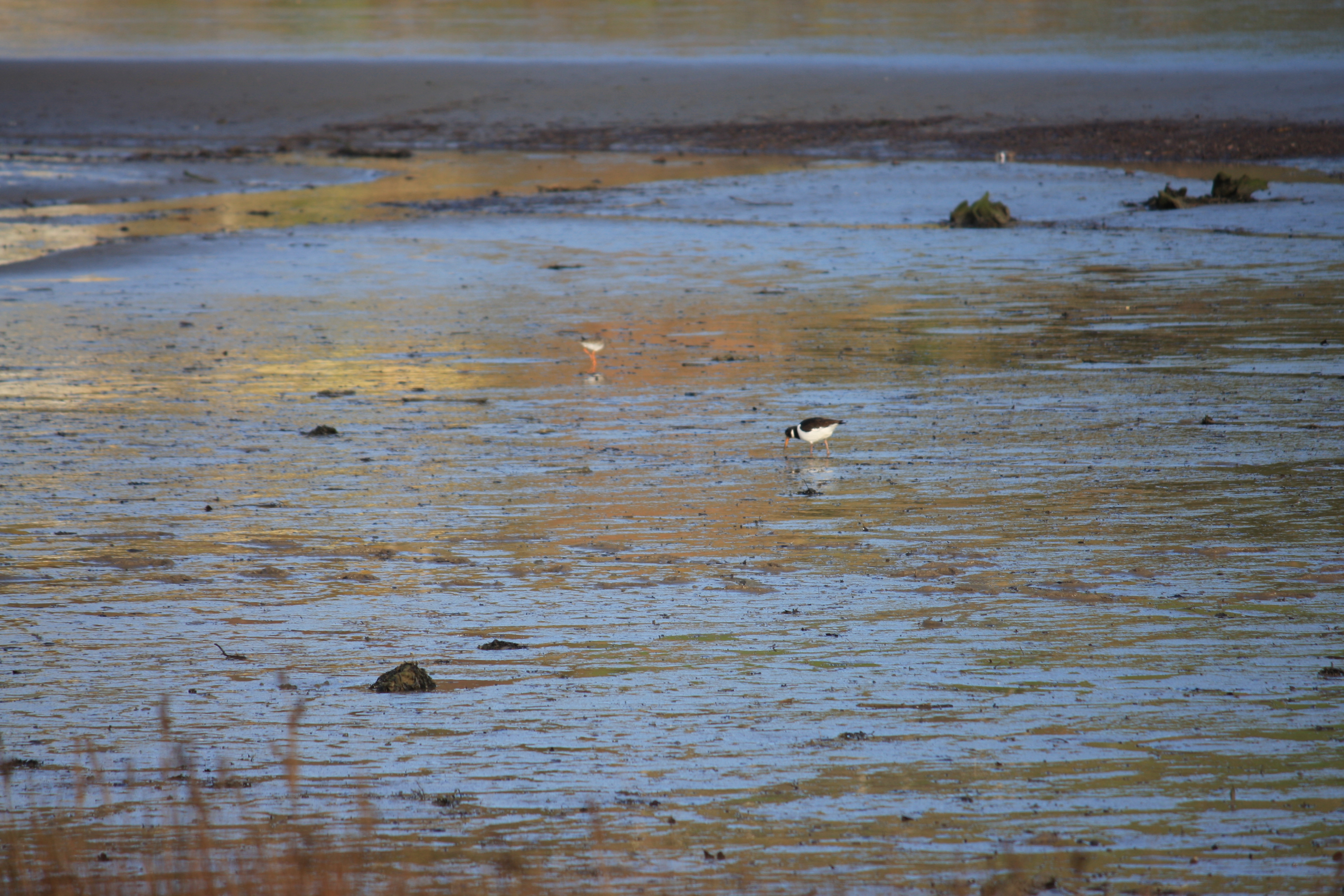
In the living world there are many different ecosystems, or habitats, for example woodland, field, ocean, beach.  What is key about these systems is they all have their individual characteristics, but they are not separate – they MEET each other, they overlap, they are inter-related.  So at the coast we have parts of the beach that generally remain dry and sandy, and parts of the beach perhaps with rock pools that are continually changing from underwater to exposed, with the tides. Then we have the sea where it is shallow and overlaps with the beach, and deeper marine environments out to sea, some of which have almost no light at all.   The ‘middle’ of these systems is more static, whereas the edges where they meet are very dynamic.  They are in relationship and this is where the most fertile actions are happening. 
In permaculture there are principles and ethics that guide us, to help design our land and systems in ways that follow and work with nature, to apply sustainable practice and operate in the most holistic, way.  For example ‘Produce no waste’ – guides us to design a system that uses the inputs we have and also makes use of the outputs.  It’s cyclical and all our resources stay within the system where possible.  Too much of any one thing, whether a ‘positive’ or a ‘negative’ thing, becomes polluting to the system.  Our aim is to keep it all in balance, in a dynamic and evolving way.  We are thinking of the whole and how everything integrates.

Another principle ‘Apply self regulation and accept feedback’  teaches us that a resilient system needs limits to enable it to work effectively.  We can observe how our system is functioning and then make changes according to our observations.  Our planet is a fantastic example of a self-regulating system.  The temperature, water, weather and populations naturally work to restore balance over time, sometimes in a dramatic way like a volcanic eruption and sometimes in slow shifts in the ocean chemistry or in the soil microbiome.

Our bodies are also self-regulating systems, mostly operating unconsciously.  When we function in good health, our body regulates temperature by sweating or shivering and it pumps blood around the body to bring nourishment, water and remove toxins. The fascial network of the body, the connective tissue, links all elements including all organs and bones to each other.  Even blood and lymph carry liquid fascia.   This fascial system integrates the body –  an impact in one area may affect all areas.  It has been described as ‘the largest organ in the body’.  When we exercise, run or do yoga, instead of focusing on how the limbs are moving, we may find it helpful to hold an image of the body’s inter-connected fascia, with every movement being a whole body experience. 
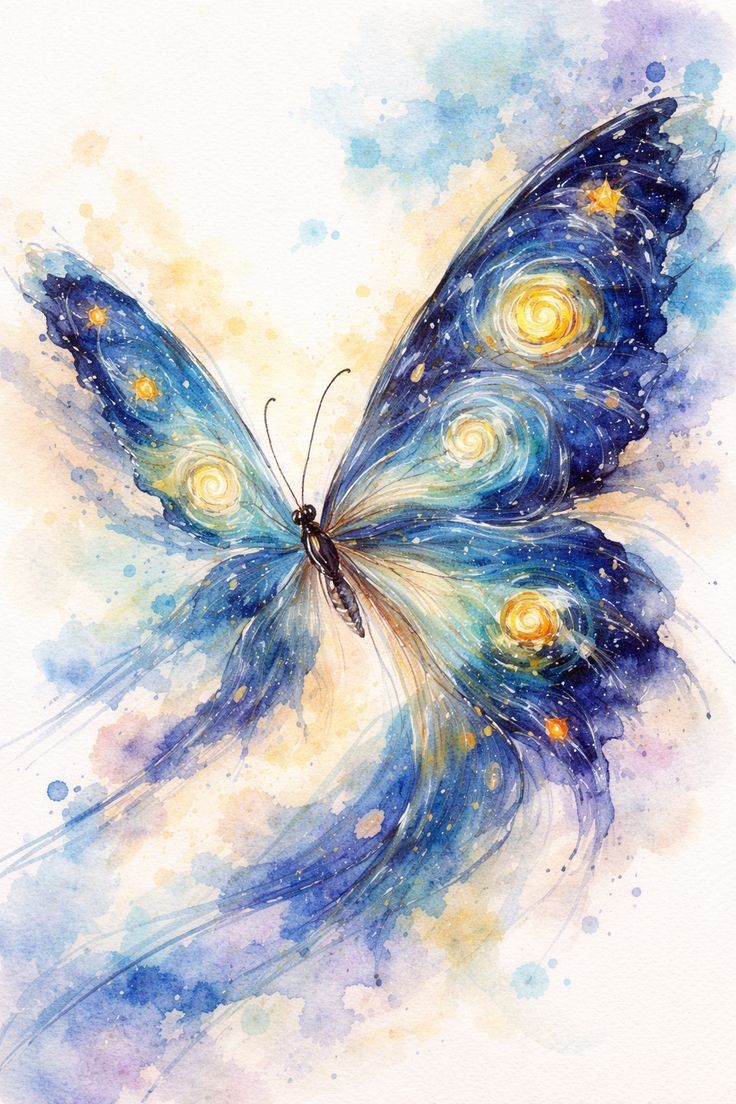
Until recently, both in science (the planet) and in medicine (the body), every element and all systems were viewed through a separate lens leading to fragmentation of the whole.  We are starting to look at things differently and we are starting to see that it is the connections that are important, both in our bodies and with the earth in which we live.  Remember the ‘Butterfly Effect’ – which views the earth as an integrated system where small causes may have large impacts.  The movement of a butterfly’s wing has the potential to affect the path of a tornado.  And so in our humble existence as part of a greater whole, how can we BE that butterfly’s wing to enact small and profound changes right now?

I am an artist, musician and orchardist living on the Gower Peninsula. I am writing this blog to share with others the power and joy we can feel as we immerse ourselves in nature recovery.  By returning to our mother earth, I believe this will lead us forward into a more sustainable way of living.  Self care and community care are vital to develop our resilience and then from a more grounded base we can create the world we want to see, starting with small and possible actions.

If you enjoyed this, please like and share. Click below to subscribe for free to my regular posts (normally every few weeks). You can unsubscribe at any time.

All photos and text are the copyright of Witchhazel Wildwood unless otherwise stated.

References:

Understanding fascia

https://education.nationalgeographic.org/resource/earths-systems/

https://www.oneearth.org/welcome-to-the-wood-wide-web/

www.permaculture.org.uk

www.Permacultureprinciples.com

The butterfly effect

Butterfly image by Lory Von

Stars and Frost

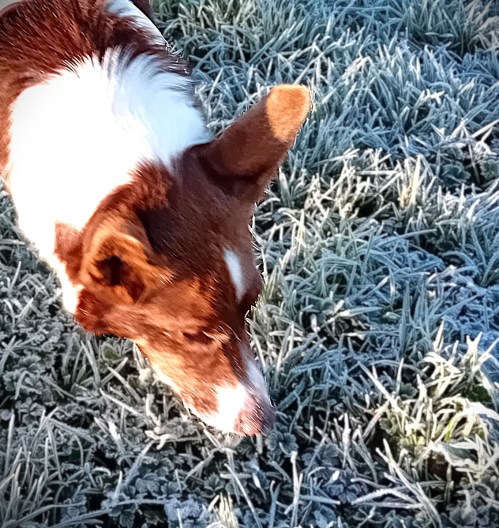
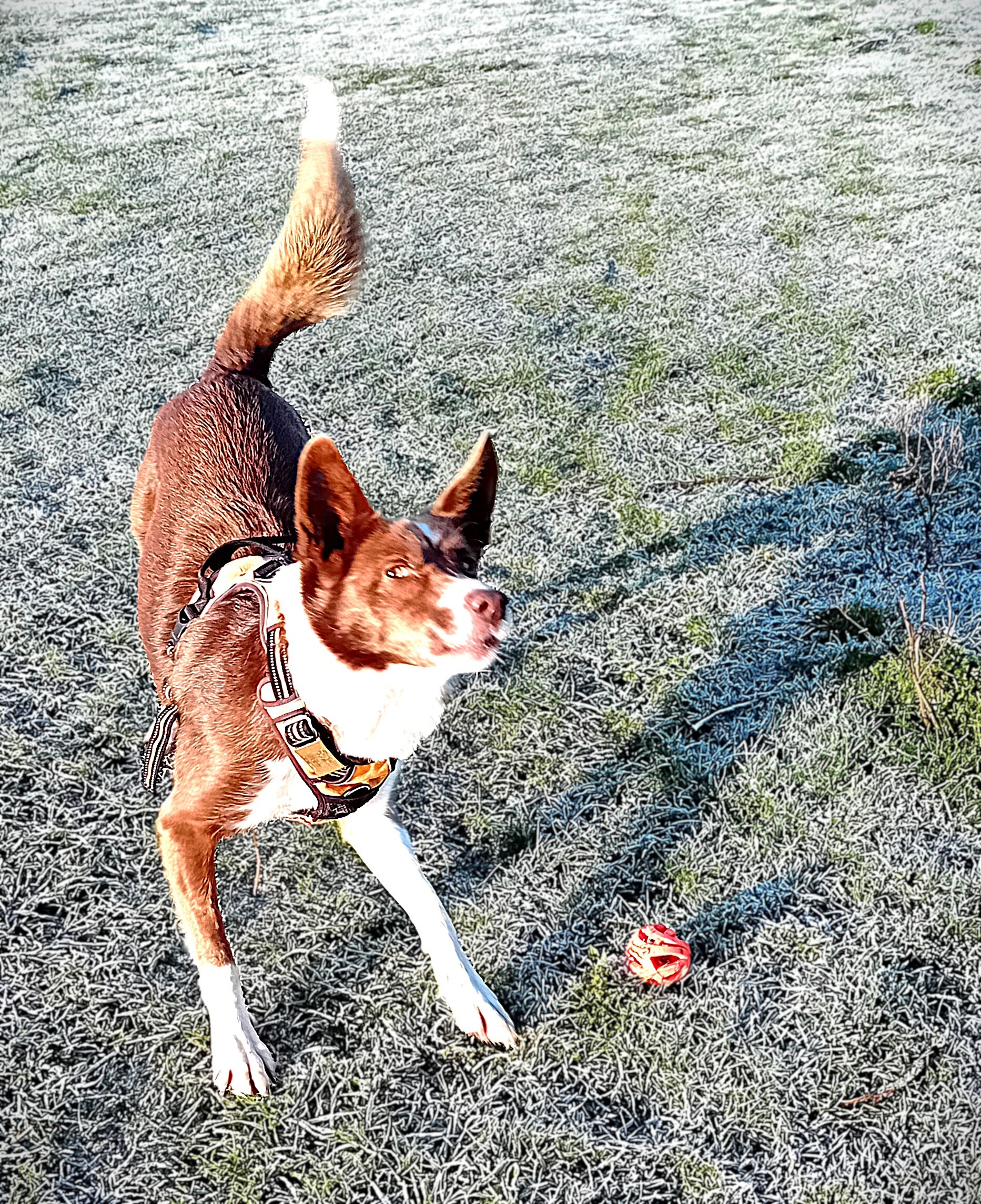
Ottie likes to go out early and greet the day. Her kelpie ears and keen nose lead us on a sniffing trail around the sparkling, frosty golf course. The soft pink dawn sky is emerging as we watch the last stars go out in the transition to a new day. 

Ottie has a love of life which she expresses through her whole body, from the tip of her nose, through her dancing paws to the end of her flag-waving tail. Her joy is infectious and she wants to play, sniff, jump in the water and greet other dogs as we journey along the path.  

When we are walking, do we engage with our surroundings in the same relational way, using all our senses and being part of the landscape? Or are we over-focused on thoughts of the past and future, which keep us separate from the environment we are moving through?

It can be interesting to step for a few minutes into an observer role and see what kind of thoughts are passing through our minds.  Are we anxious, maybe trying to fix things, plan things or dwell on the past.  Is this a common pattern for us and is there a character within us who dominates our walk?  What is it they need or want to say, and what do we want to say to them?

How would it be to engage with our walk today from an animal state of mind – to be in the body and completely present within the environment.  To do this we can invite our senses to open and it may help to stop for a moment and shut our eyes, check in with our breathing, feel the ground under our feet.  Tune into listening, notice sounds that are close by and those further away.  Then holding our hands out notice the temperature and feel of the air around us.  Sniff the air to see what kind of day it is.  If we open our mouths that enhances our sense of smell and we can also taste the day.  Then finally bring back a soft focus that allows all the other senses to work together as we walk.  How different does that feel?

I am an artist, musician and orchardist living on the Gower Peninsula. I am writing this blog to share with others the power and joy we can feel as we immerse ourselves in nature recovery.  By returning to our mother earth, I believe this will lead us forward into a more sustainable way of living.  Self care and community care are vital to develop our resilience and then from a more grounded base we can create the world we want to see, starting with small and possible actions.

If you enjoyed this, please like and share. Click below to subscribe for free to my regular posts (normally every few weeks). You can unsubscribe at any time.

All photos and text are the copyright of Witchhazel Wildwood unless otherwise stated.

Weird and Wonderful Medlars

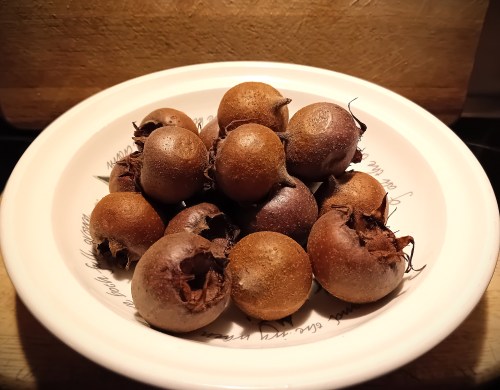
I recently found an exciting medlar recipe I wanted to try, so I went harvesting in our community forest garden and gathered these from a young ‘Nottingham Medlar’ tree (Mespilus germanica ‘Nottingham’), which had a good crop this year. Medlar trees are very easy to grow and they start to produce fruit within a couple of years. The medlar fruit are normally picked at this time in November after the first frost but I think this year I should have picked them maybe a week or two sooner before they ripened on the tree – some of them where already quite juicy and then when I ‘bletted’ them they were a bit over-ripe. Bletting just means you space them out on a tray somewhere cool and let them soften for a few days. In the photo these have been bletted for about 5 days, and you can see they have just a little wrinkling to the skin, but some are a bit darker than others.   

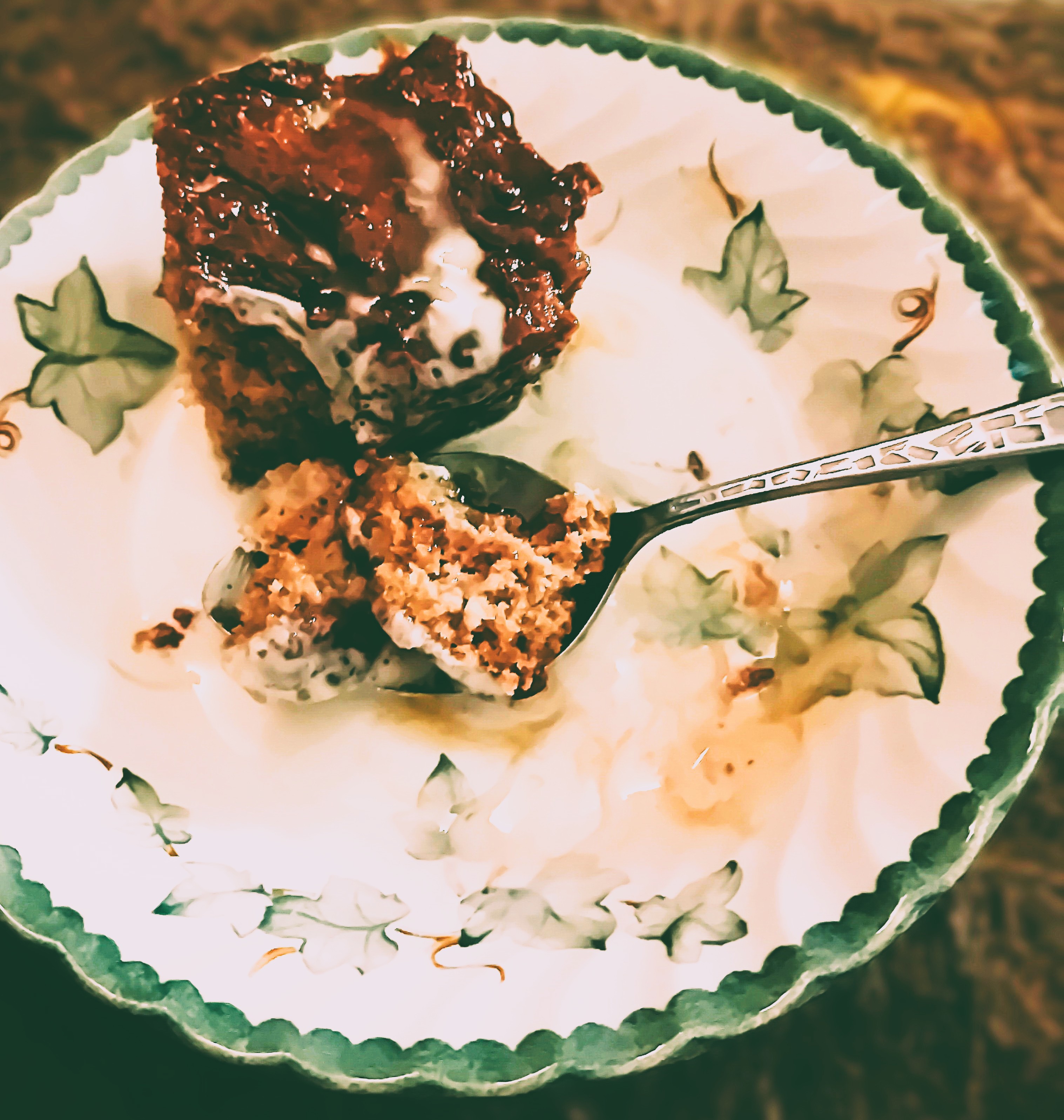
To prepare the fruit, I cooked them in a little water for about 10 minutes and then squeezed out the pulp and pushed it through a sieve. I was then ready to make an adaption of Mark Diacono’s fabulous recipe for Medlar Sticky Toffee Pudding (see link below). My adjustments for a vegan version were as follows – I swapped out the butter for vegan spread. I also removed the eggs and added an extra teaspoon of baking powder, plus some plant milk. I swirled vegan cream over the hot pudding before serving.   If you can find some medlars, I recommend you give this pudding a try – comforting and delicious!

https://www.otterfarm.co.uk/medlar-sticky-toffee-pudding/   (Mark Diacono in Devon)

Added note: don’t eat the medlar seeds, they contain hydrogen cyanide (as do the seeds of apples and cherries!). Dogs should also not eat the seeds, although the flesh of medlar fruit is not known to be harmful.

I am an artist, musician and orchardist living on the Gower Peninsula. I am writing this blog to share with others the power and joy we can feel as we immerse ourselves in nature recovery.  By returning to our mother earth, I believe this will lead us forward into a more sustainable way of living.  Self care and community care are vital to develop our resilience and then from a more grounded base we can create the world we want to see, starting with small and possible actions.

If you enjoyed this, please like and share. Click below to subscribe for free to my regular posts (normally every few weeks). You can unsubscribe at any time.

All photos and text are the copyright of Witchhazel Wildwood unless otherwise stated.

Meeting my Ancestors in the Orchard

Night comes early and I step out into the dusky chill. Wispy clouds scud across the moon and an owl calls.  The dark silhouette of the ash tree reaches down to touch my hair as I pass.

This Samhain I am greeting my beloved dead, the newly departed spirit of my mother. This has not been an easy grief. It was heartbreaking moving her into a nursing home where she died in February this year.  It’s hard for me and her to find forgiveness for that.

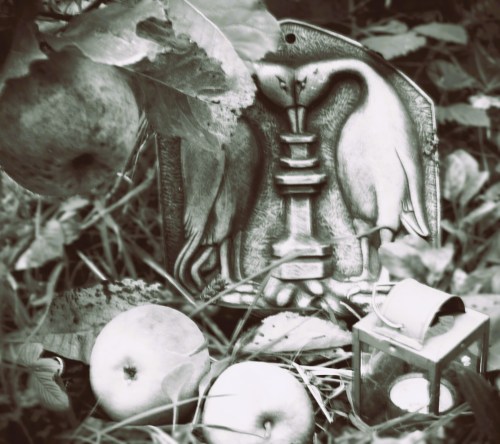
So I come to the community orchard to make my peace and honour her. The formerly neglected fruit trees have recently taken on a new lease of life as the setting for a memorial garden. A dedicated group carried out bramble clearing, sowed wildflowers and created areas to put plaques and natural offerings such as painted stones and carved wood. 

The gently weaving path takes me past the thoughtfully placed dedications that have appeared over the summer. I am carrying my offering – a piece of lovingly smoothed wood and I place it down with tears and gratitude, both to my mum for her life and to the community for this blessed space of connection.

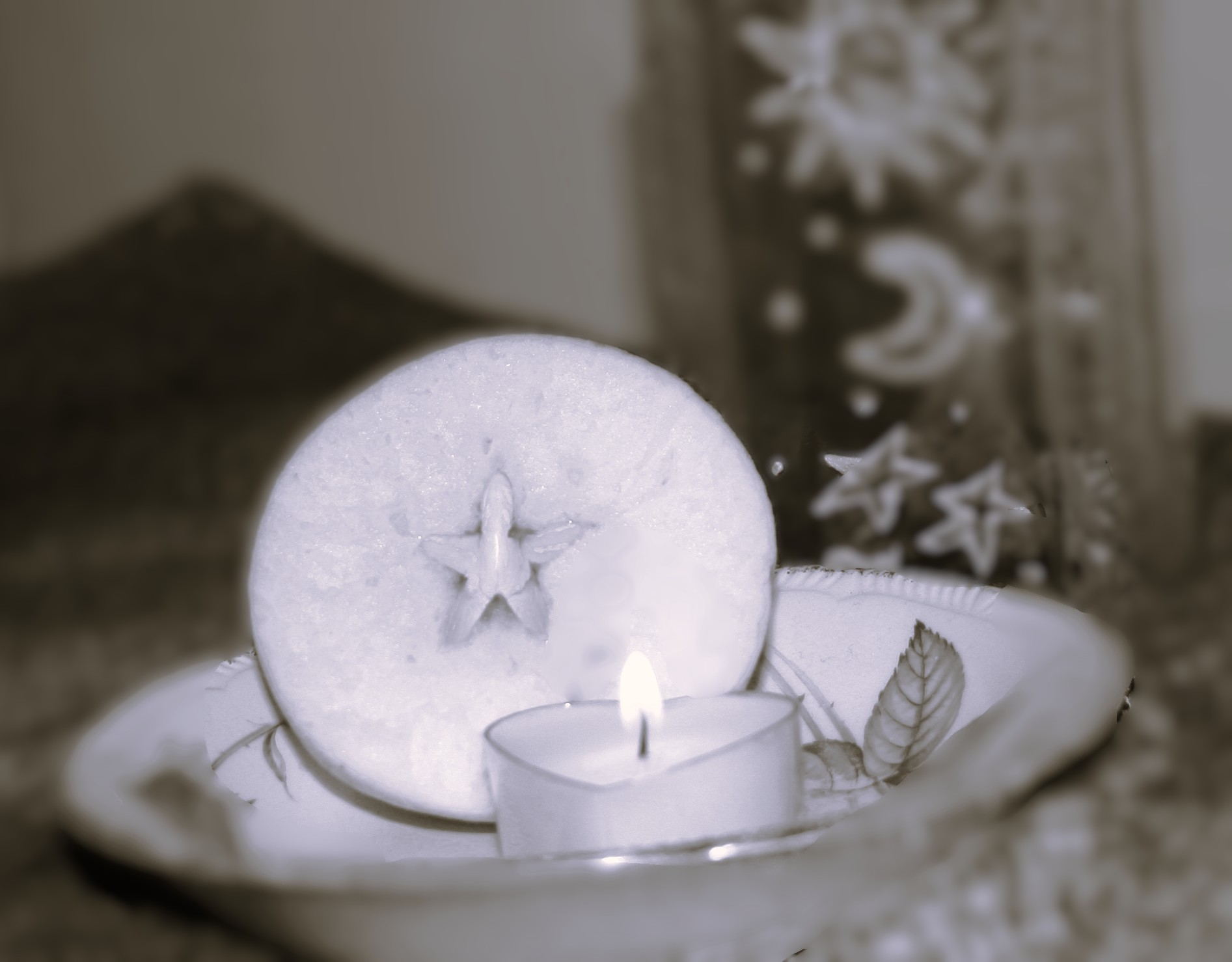
The veils are thin on this All Hallows Eve. I hang candles in the trees and they bring a comforting light to the space. Apple trees are said to represent wisdom and immortality, standing amongst them helps me connect to the many layers of our world. I cut through an apple to reveal the star of pips and make my offering to the beloved spirits.  ‘May you never hunger’ spirals out with my breath, reminding me of the possibility for renewal that comes from making peace with death.

I am an artist, musician and orchardist living on the Gower Peninsula. I am writing this blog to share with others the power and joy we can feel as we immerse ourselves in nature recovery. By returning to our mother earth, I believe this will lead us forward into a more sustainable way of living. Self care and community care are vital to develop our resilience and then from a more grounded base we can create the world we want to see, starting with small and possible actions. 

If you enjoyed this, please like and share. Click below to subscribe for free to my regular posts (normally every few weeks). You can unsubscribe at any time.

    All photos and text are the copyright of Witchhazel Wildwood unless otherwise stated.

    Wild Wellbeing – October 2025

    The changing colours of our inner landscape

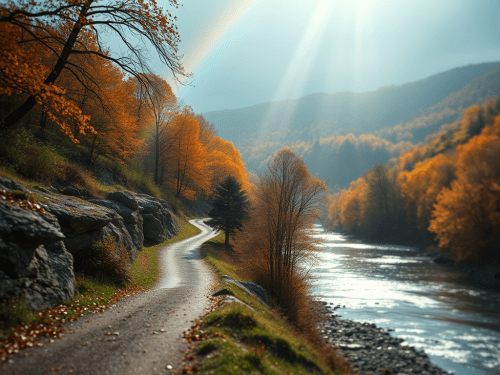
    Autumn walks are the best.  I love the crunch underfoot, as I walk along the path by the river.  Stretching above me, the wooded hill is a myriad of changing colours.  The red, orange, yellow, green, brown leaves pile up at the side of the path, nestling a log dancing with delicate fungi.  As I pass a rocky outcrop, the last of the salty coastal sea-beet offers itself from its position at the high tide mark.  The pools on the estuary floor glint as the sun’s rays strike out from the clouds through a delicate sprinkling rain.  In front of me is the centrepiece, the luminous, shimmering rainbow arching over the valley and landing itself enticingly close  – this way lies the crock of gold!

    I started the day with anxiety, unable to see the gifts that the day had to offer me.  Yet now I am out walking in the weather, nature has carried me softly into the present.  There is so much to see on the earthly stage in front of me that the past or the future are no longer a concern.  My mood has completely shifted and the bright new day has cleared away my inner clouds and brought me a flood of ideas that I can’t wait to implement when I get home.   

    If you recognise this pattern, you may, like me, be sensitive to changes in atmospheric pressure – barometric sensitivity.  The gathering clouds can feel like they are pressing down on our heads and pinning us to the bed, causing depression, fatigue, stress and pain for some.   The mind stops functioning and any joy left in the day scurries into a dark corner.   Through the numbness, I have learnt to listen to the whisper which tells me to get myself out into nature.   This works every time – nature connection is the path we can step onto whenever we feel out of kilter, when the day deals us a bad hand or we are overwhelmed with life.  Our mood may feel dark, but putting one foot in front of the other, whether down the garden path, or through the park or wider landscape, we let the safe arms of mother earth lead us gently forward and into a bigger and more open world.  We are then creating an opportunity for the clouds to part and the light of the day to reflect back at us.  If we are lucky we may even stumble upon some unexpected treasure we can curl our fingers around to accompany us on our day.

    I am an artist, musician and orchardist living on the Gower Peninsula. I am writing this blog to share with others the power and joy we can feel as we immerse ourselves in nature recovery.  By returning to our mother earth, I believe this will lead us forward into a more sustainable way of living.  Self care and community care are vital to develop our resilience and then from a more grounded base we can create the world we want to see, starting with small and possible actions.

    If you enjoyed this, please like and share. Click below to subscribe for free to my regular posts (normally every few weeks). You can unsubscribe at any time.

    All photos and text are the copyright of Witchhazel Wildwood unless otherwise stated.