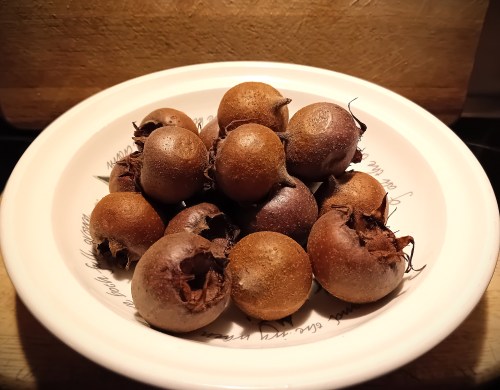
I recently found an exciting medlar recipe I wanted to try, so I went harvesting in our community forest garden and gathered these from a young ‘Nottingham Medlar’ tree (Mespilus germanica ‘Nottingham’), which had a good crop this year. Medlar trees are very easy to grow and they start to produce fruit within a couple of years. The medlar fruit are normally picked at this time in November after the first frost but I think this year I should have picked them maybe a week or two sooner before they ripened on the tree – some of them where already quite juicy and then when I ‘bletted’ them they were a bit over-ripe. Bletting just means you space them out on a tray somewhere cool and let them soften for a few days. In the photo these have been bletted for about 5 days, and you can see they have just a little wrinkling to the skin, but some are a bit darker than others.
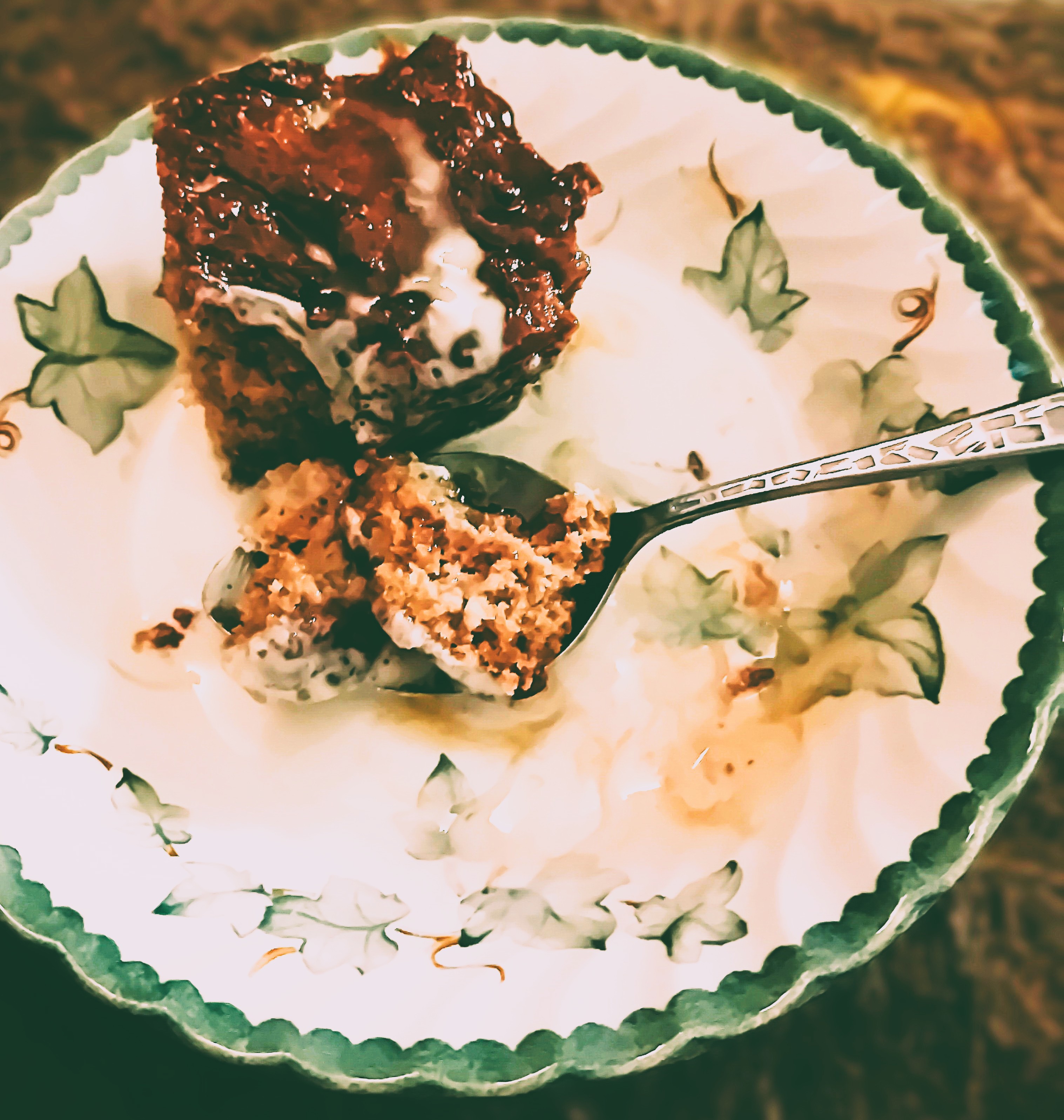
To prepare the fruit, I cooked them in a little water for about 10 minutes and then squeezed out the pulp and pushed it through a sieve. I was then ready to make an adaption of Mark Diacono’s fabulous recipe for Medlar Sticky Toffee Pudding (see link below). My adjustments for a vegan version were as follows – I swapped out the butter for vegan spread. I also removed the eggs and added an extra teaspoon of baking powder, plus some plant milk. I swirled vegan cream over the hot pudding before serving. If you can find some medlars, I recommend you give this pudding a try – comforting and delicious!
https://www.otterfarm.co.uk/medlar-sticky-toffee-pudding/ (Mark Diacono in Devon)
Added note: don’t eat the medlar seeds, they contain hydrogen cyanide (as do the seeds of apples and cherries!). Dogs should also not eat the seeds, although the flesh of medlar fruit is not known to be harmful.
I am an artist, musician and orchardist living on the Gower Peninsula. I am writing this blog to share with others the power and joy we can feel as we immerse ourselves in nature recovery. By returning to our mother earth, I believe this will lead us forward into a more sustainable way of living. Self care and community care are vital to develop our resilience and then from a more grounded base we can create the world we want to see, starting with small and possible actions.
If you enjoyed this, please like and share. Click below to subscribe for free to my regular posts (normally every few weeks). You can unsubscribe at any time.
All photos and text are the copyright of Witchhazel Wildwood unless otherwise stated.
 Wildwood Edge